Abstract: On the other hand, several mutants, including the most prevalent N501Y and B.1.1.7 variants, as well as the K444R, L455F, Q493R, and Y505W variants exhibited lower binding free energy as compared to the WT spike.
Result: The other investigated mutants, including the B.1.1.7 (-13.4 kcal/mol), K444R (-13.8 kcal/mol), L455F (-13.7 kcal/mol), Q493R (-13.5 kcal/mol) and Y505W (-14.4 kcal/mol) had the binding free energy lower than the WT spike protein, which indicated their higher affinity for the human ACE2 receptor.
Result: The substitutions G476A,
Vaccine-escape and fast-growing mutations in the United Kingdom, the United States, Singapore, Spain, India, and other COVID-19-devastated countries.
Conclusion: While mutations Q493R, R408I, Q493H, P384S, and N501T can also be disruptive, but mutations N439K, V367F, and S477R are not as disruptive as other rapidly growing ones.
Table: Q493R
SARS-CoV-2 mRNA vaccination induces functionally diverse antibodies to NTD, RBD, and S2.
An overview of the preclinical discovery and development of bamlanivimab for the treatment of novel coronavirus infection (COVID-19): reasons for limited clinical use and lessons for the future.
PMID: 34304682
2021
Expert opinion on drug discovery
Conclusion: The strategy of antibody cocktails could represent a temporary solution (cocktails cannot escape resistance for long time if occurrence of variants is too frequent), although their economic sustainability should be carefully considered: resistance to the bamlanivimab-etesevimab cocktail due to Q493R mutation has indeed already been reported, although fitness of such strain remains unconfirmed.
Emergence of SARS-COV-2 Spike Protein Escape Mutation Q493R after Treatment for COVID-19.
Abstract: We report in vivo selection of a severe acute respiratory syndrome coronavirus 2 spike mutation (Q493R) conferring simultaneous resistance to bamlanivimab and etesivimab.
Introduction: Emergence of SARS-COV-2 spike protein escape mutation Q493R after treatment for COVID-19.
Introduction: However, the May 3 specimen showed a secondary A1478G peak in the spike protein gene, corresponding to the spike Q493R mutation, which became predominant by May 8 (Ct 18; GenBank accession no.
Introduction: In a flow cytometry competitive assay, Q493R reduces the 50% inhibitory concentration >100-fold for bamlanivimab and 4
Emergence of Multiple SARS-CoV-2 Antibody Escape Variants in an Immunocompromised Host Undergoing Convalescent Plasma Treatment.
Abstract: We identified a mixed viral population with five different S protein mutations (141 to 144 deletion, 243 to 244 deletion, E484K, Q493K, and Q493R) at the NTD or RBD region from the second tracheal aspirate sample (day 21) and a predominance of the S protein 141 to 144 LGVY deletion and E484K mutant on day 27.
Result: If this was due to superinfection, the patient would have had to acquire three different viral genotypes, i.e., S:Q493R and 243-244LA, ORF1a:A138T, S:141-144del, and E484K, and ORF1
Complete map of SARS-CoV-2 RBD mutations that escape the monoclonal antibody LY-CoV555 and its cocktail with LY-CoV016.
Result: However, there are some sites where single mutations escape binding by both LY-CoV555 and LY-CoV016, and as a result a 1:1 cocktail of the two antibodies is escaped by several single mutations including I472D, G485P, and Q493R/K.
Result: We also note that single mutations that escape both antibodies (Q493R and Q493K) have been observed in a handful of sequenced isolates.
Emergence of E484K Mutation Following Bamlanivimab Monotherapy among High-Risk Patients Infected with the Alpha Variant of SARS-CoV-2.
Result: Of note, a Q493R mutation, which may impact ACE-2 affinity, was observed in the S gene at day 23.
Discussion: Finally, all six patients presented a mutation associated with resistance or suspicion of resistance in the Spike protein, including E484A/K, but also S494P and Q493R.
Case Report: Paucisymptomatic College-Age Population as a Reservoir for Potentially Neutralization-Resistant Severe Acute Respiratory Syndrome Coronavirus 2 Variants.
PMID: 34544043
2021
The American journal of tropical medicine and hygiene
Abstract: Among the sequences were three novel viral variants: BV-1 with a B.1.1.7/20I genetic background and an additional spike mutation Q493R, associated with a mild but longer-than-usual COVID-19 case in a college-age person, BV-2 with a T478K mutation on a 20B genetic background, and BV-3, an apparent recombinant lineage.
Conclusion: BV-1 is genetically distinct from previously reported B.1.1.7/Q493R variants, forming a new cluster along with 45 other non-Q493R B.1.1.7 sequences, collected January 25 to March 11 from the same on-campus popula
Conclusion: Based on this, it is inferred that the Q493R mutation of BV-1 may confer resistance to some neutralizing antibodies, though we have not directly tested the neutralizing activity.
Review of the mechanisms of SARS-CoV-2 evolution and transmission.



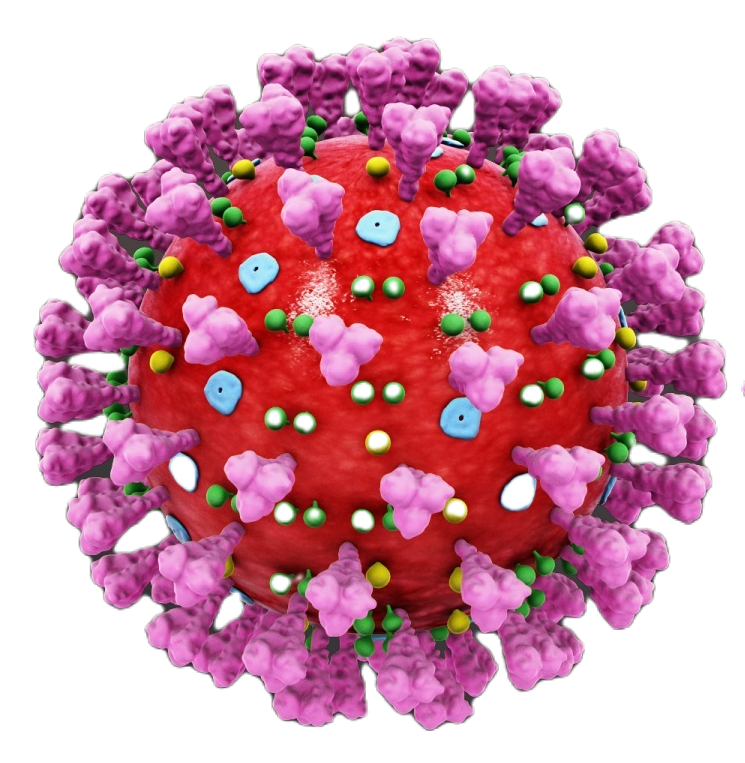 SARS_CoV_2 mutation literature information.
 PMID:
PMID:  2021
2021
 EXCLI journal

 Browser Board
 Co-occurred Entities
 Filtrator
 ViMRT
ViMRT