Method: B.1.1.7 virus contained the following spike mutations: del-H69-V70, del-Y144, N501Y, A570D, D614G, P681H, T716I, S982A, D1118H.
Table: P681H
Occurrence of a novel cleavage site for cathepsin G adjacent to the polybasic sequence within the proteolytically sensitive activation loop of the SARS-CoV-2 Omicron variant: The amino acid substitution N679K and P681H of the spike protein.
Method: Cells were washed three times with 1X DPBS and then infected with 700 ul of either VSV G, SARS-CoV-2 S, SARS-Cov-2 P681H S, SARS-CoV-2 B.1.1.1.7 S, or Delta-Envelope pseudoparticles.
Method: Mutagenesis was carried out on a pCDNA-SARs2 Wuhan-Hu 1 S plasmid to create the P681H mutation, using the Agilent QuickChange Lightning Mutagenesis kit (The original plasmid was generously provided by David Veesler, University of Washington USA).
Method: VeroE6 and Vero-TMPRSS2 cells were transfected with a plasm
Method: pCDNA-SARC-CoV-2 Wuhan-Hu1 P681H S plasmid was then extracted using the Qiagen QIAprep Spin Miniprep Kit and Sanger Sequencing was used to confirm incorporation of the mutation.
A new SARS-CoV-2 lineage that shares mutations with known Variants of Concern is rejected by automated sequence repository quality control.
Abstract: We report a SARS-CoV-2 lineage that shares N501Y, P681H, and other mutations with known variants of concern, such as B.1.1.7.
Result: Similarly, P681H is located within the spike protein furin cleavage site which is thought to be a hotspot of viral adaptive evolution (e.g., ).
Result: Specifically, each sample contains Spike mutations S494P, N501Y, D614G, P681H, K854N, and E1111K.
Vaccine Breakthrough Infections with SARS-CoV-2 Variants.
PMID: 33882219
2021
The New England journal of medicine
Discussion: Some of the substitutions in Patient 1 (T95I, del144, E484K, A570D, D614G, P681H, and D796H) were shared with B.1.526 (T95I, E484K, and D614G), and three substitutions were shared with Patient 2 (in whom the variants T95I, G142V and del144, F220I, R190T, R237K, R246T, and D614G were detected).
Mutations in the SARS-CoV-2 spike protein modulate the virus affinity to the human ACE2 receptor, an in silico analysis.
Introduction: This linage also exhibited a change at the residue 681 (P681H), one of the four residues comprising the furin cleavage site located between S1 and S2 domains in the spike protein (Rambaut et al., 2020).
Introduction: Thus, P681H residue substitution could additionally enhance this interaction.
Introduction: This mutation cooccurs with several mutations, including missense mutations (A570D, P681H, T716I, S982A, and D1118H), as well as disruptive in-frame deletions (H69-V70 and Y145).
Table: p.Pro681His
Combined RT-qPCR and pyrosequencing of a Spike glycoprotein polybasic cleavage motif can uncover pediatric SARS-CoV-2 infections associated with heterogeneous presentation.
PMID: 33893880
2021
Molecular and cellular pediatrics
Abstract: Moreover, due to the incremental transmission of SARS-CoV-2 variants of concern, we note that the used strategy can uncover (Spike) P681H allowing the pre-selection of SARS-CoV-2 B.1.1.7 candidate specimens for deep sequencing.
Result: Due to the incremental transmission of SARS-CoV-2 variants-of-concern, we note that the used strategy can uncover (Spike) P681H allowing the pre-selection of SARS-CoV-2 B.1.1.7 candidate specimens for deep sequencing.
Result: Remarkably, N501Y was seen in 2 other adult samples (Figure S7
Discussion: In contrast, genotyping by pyrosequencing alone seems inprecise, since the solitary occurrence of N501Y or P681H is not sufficient for the detection of the currently emerging variants-of-concern.
Emerging variants of concern in SARS-CoV-2 membrane protein: a highly conserved target with potential pathological and therapeutic implications.
Result: The novel combination of M:I82T, the three signature Spike mutations (S:S494P, the S:P681H and S:T716I) from B.1.1.7, and the N:T205I mutation is therefore of particular concern.
Result: There were 10 other missense mutations present in at least 90% of the isolates in this clade and 8 of them were enriched by 73 to 146 fold compared to the general B.1 lineage including the 3 signature mutations in the spike protein (S:S494P, the S:P681H and PMID: 33907511
2021
International journal of biological sciences
Introduction: In addition, the P681H mutation has appeared many times independently and has become dominant in the local epidemic in Hawaii.
Introduction: The function of mutation of P681H is unclear but it locates near the furin-cleavage site, which is important for SARS-CoV-2 entry.
Introduction: Three mutations, namely N501Y, DeltaH69/DeltaV70 and P681H, locate in S protein.
Emergence in southern France of a new SARS-CoV-2 variant harbouring both N501Y and E484K substitutions in the spike protein.
Introduction: There are seven substitutions (N501Y, A570D, D614G, P681H, T716I, S982A, and D1118H) and three deletions (H69Del, V70Del, and Y144Del) in the spike of the N501Y.V1 variant comparing with the Wuhan-Hu-1 strain (wide type), with N501Y the only mutation in the ACE2 interface of the receptor binding domain (RBD).



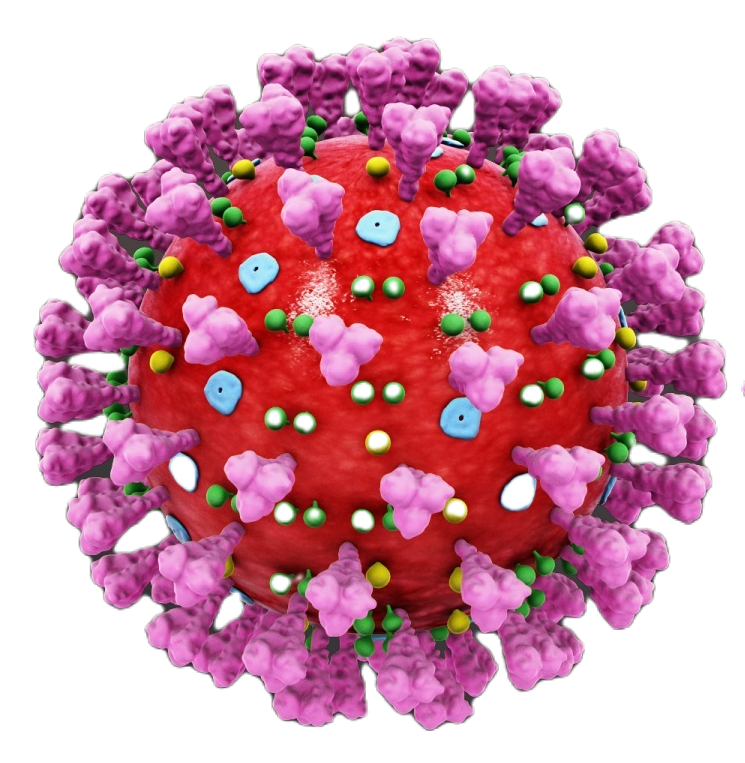 SARS_CoV_2 mutation literature information.
 PMID:
PMID:  2021
2021
 bioRxiv

 Browser Board
 Co-occurred Entities
 Filtrator
 ViMRT
ViMRT