Abstract: We constructed nanobody tandems and identified nanobody monomers that tolerate the K417N/T, E484K, N501Y, and L452R immune-escape mutations found in the Alpha, Beta, Gamma, Epsilon, Iota, and Delta/Kappa lineages.
Rapid, inexpensive methods for exploring SARS CoV-2 D614G mutation.
Discussion: Moreover, a UK variant, N501Y, has been emerged since October 2020 and currently spreading in the country and has become a public threat in more than 30 countries.
Discussion: We have recently developed methods for detecting N501Y mutation, which can be used with the methods of the current study to explore SARS CoV-2 reinfections.
Mutational analysis in international isolates and drug repurposing against SARS-CoV-2 spike protein: molecular docking and simulation approach.
Introduction: Our work was spurred by Argentina's nascent genomic surveillance efforts, which detected multiple independent lineages with S: E484K (B.1.1.318 and P.2) and/or S: N501Y substitutions (B.1.1.7 and P.1) in common, just as Argentina had started rolling out its vaccination campaign, which commenced on December 29, 2020.
Result: Experimental measurements of both RBD and trimeric spike binding to ACE2 have revealed that the E484K mutation alone does not confer increase binding affinity for ACE2 unlike N501Y.
Result: This is not surprising as both harbor the N501Y mutation known to enhance affinity of RBD for ACE2.
SARS-CoV-2 R.1 lineage variants that prevailed in Tokyo in March 2021.
Abstract: The samples were analyzed using reverse transcription-PCR with melting curve analysis to detect the N501Y and E484K mutations.
Abstract: Therefore, we began testing all patients with COVID-19 for the N501Y a
Method: RT-PCR was performed using the primers and probes provided in the VirSNiP SARS-CoV-2 Spike N501Y and VirSNiP SARS-CoV-2 Spike E484K kits (TIB Molbiol) and the LightCycler Multiplex RNA Virus Master (Roche Molecular Systems, Inc.).
Method: To detect N501Y and E484K mutations, viral RNA was purified from the PCR-positive samples using the EZ1 Virus Mini Kit v2.0 and EZ1 advanced XL (Qiagen).
Structural modelling of SARS-CoV-2 alpha variant (B.1.1.7) suggests enhanced furin binding and infectivity.
Introduction: Notably, the N501Y mutation is located in the receptor-binding domain (RBD), which interacts with ACE2 and the deletions present on the N-terminal domain (NTD) of the S-protein.
Introduction: The B.1.1.7 SARS-CoV-2 variant strain exhibits missense mutations (N501Y, A570D, P681H, D614G, T716I, S982A, D1118H) and three deletions in residues H69, V70, Y144.
Result: Genome sequencing of the new B.1.1.7 SARS-CoV-2 strain presented missense mutations (N501Y, A570D, P681H, PMID: 34326308
2021
Signal transduction and targeted therapy
Result: Moreover, variants with combinational mutations in S protein, including K417N/E484K, N501Y/K417N, N501Y/E484K and N501Y/K417N/E484K, were still sensitive to EK1 and EK1C4.
Result: Most recently, the newly emerged variants carrying crucial mutations in their S proteins, e.g., K417N, E484K, N501Y or D614G, quickly became the locally dominant variants.
Result: To explore whether EK1 peptides are antivirally active against infection mediated by PMID: 34332998
2021
Journal of virological methods
Abstract: Target sought were deletion H69/V70 and mutations N501Y and E484K.
Introduction: This is respectively the case for the E484K mutation, found in the B.1.351 and P.1 variants, and for the N501Y mutation found in these two VOCs as well as in the B.1.1.7.
Discussion: It distinguishes the VOC B.1.351 from the VOC P.1 by amplification of the K417N and K417T mutations respectively when both the N501Y and E484K mutations were found positive with the Variant I Assay.
Discussion: The NovaplexSARS-CoV-2 Variants I Assay diagnoses the presence of E484K, N501Y mutations and H69/V70 deletion.
Double masking protection vs. comfort-A quantitative assessment.
PMID: 34335010
2021
Physics of fluids (Woodbury, N.Y.
Abstract: The virus responsible for causing COVID-19 has undergone several mutations in the recent past, including B.1.1.7, B.1.351, P.1, and N501Y, B.1.617, with a higher infectious rate.
Binding affinity and mechanisms of SARS-CoV-2 variants.
PMID: 34336146
2021
Computational and structural biotechnology journal
Result: Both the 501Y.V1 and N439K variants have single mutated residues in the RBD, while the 501Y.V2 variant is comprised of three mutated residues (K417N, E484K, and N501Y).
Result: However, compared with the single N501Y mutation, the additional K417N and E484K mutations resulted in a decreased affinity between 501Y.V2 and hACE2 (as shown in Table 1).
Result: In the 501Y.V1 and 501Y.V2 variants, the mutation from ASN501 to TYR501 formed strong hydrogen bonds and salt bridges between residues TYR501-TYR41 and THR500-ASP355, as shown in.
Result: Overall, our results show that the mutations (N501Y,
 ViMRT
ViMRT



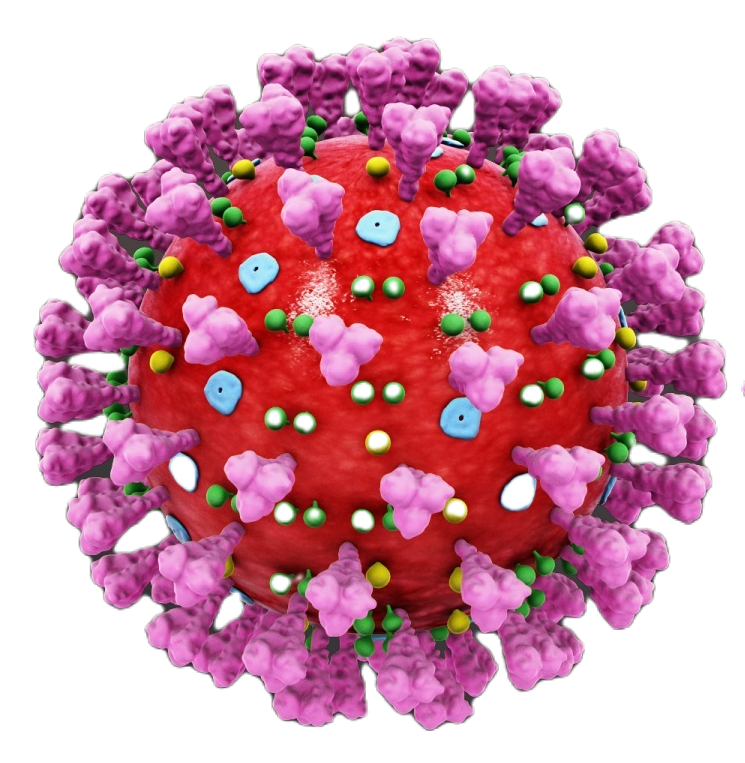 SARS_CoV_2 mutation literature information.
 PMID:
PMID:  2021
2021
 The EMBO journal