Discussion: While S H655Y has not been found in mink and is not one of the defining B.1.1.7 mutations, another one of the defining B.1.1.7 mutations, Spike N501Y, has emerged independently in mouse models.
Complete map of SARS-CoV-2 RBD mutations that escape the monoclonal antibody LY-CoV555 and its cocktail with LY-CoV016.
Result: have reported that E484K and K417N dramatically and specifically reduce neutralization by LY-CoV555 and LY-CoV016, respectively, while N501Y has no impact on neutralization by either antibody.
SARS-CoV-2 B.1.1.7 and B.1.351 Spike variants bind human ACE2 with increased affinity.
Abstract: The B.1.351 variant harboring three mutations, (E484K, N501Y, and K417N) binds the ACE2 at nearly five-fold greater affinity than the original SARS-COV-2 RBD.
Introduction: The B.1.351 variant first identified in South Africa has 3 notable mutations in the Spike Receptor-Binding Domain (RBD), namely K417N, E484K and N501Y while the B.1.1.7 variant first identified in the UK carries the N501Y mutation.
Emergence and Expansion of the SARS-CoV-2 Variant B.1.526 Identified in New York.
Abstract: Two signature mutations of concern are E484K, which plays a crucial role in the loss of neutralizing activity of antibodies, and N501Y, a driver of rapid worldwide transmission of the B.1.1.7 lineage.
Introduction: 1B), six cases with N501Y were identified as belonging to the B.1.1.7 lineage, two cases with E484K as P.2, and one sample as B.1.351, which harbored both N501Y and E484K based on our screening assay.
Introduction: Sequencing results verified the E484K and N501Y substitutions in all samples identified by our screening PCR assays.
Introduction: The hallmark mutation of B.1.1.7, the first SARS-CoV-2 variant of concern that emerged in the UK, is N50
Lethal zoonotic coronavirus infections of humans - comparative phylogenetics, epidemiology, transmission, and clinical features of coronavirus disease 2019, The Middle East respiratory syndrome and severe acute respiratory syndrome.
PMID: 33660619
2021
Current opinion in pulmonary medicine
Abstract: The emergence of genetic variants, such as D614G, N501Y (variants 1 and 2), has led to an increase in transmissibility and raises concern about the possibility of re-infection and impaired vaccine response.
Resistance of SARS-CoV-2 variants to neutralization by monoclonal and serum-derived polyclonal antibodies.
Result: A B.1.1.7 isolate had signature changes in the spike gene including the 69-70 and 144-145 deletions, and N501Y, A570D, D614G, and P681H substitutions.
Result: A heatmap analysis showed that most individuals lost neutralizing activity against all three viruses containing the E484K and N501Y mutations (Fig 2f).
Result: Although the S309 + S2E12 combination showed reduced (~10-fold) potency against the E484K/N501Y/D614G strain, it performed effectively against the Wash SA-B.1.351 virus, again suggesting that additional mutations in natural variants (e.g., K417N) enable some antibodies to functi
Extremely potent human monoclonal antibodies from COVID-19 convalescent patients.
Abstract: The most potent monoclonal antibody, engineered to reduce the risk of antibody-dependent enhancement and prolong half-life, neutralized the authentic wild-type virus and emerging variants containing D614G, E484K, and N501Y substitutions.
Discussion: Out of the 453 neutralizing antibodies that were tested and characterized, one antibody (J08) showed extremely high neutralization potency against both the WT SARS-CoV-2 virus isolated in Wuhan and emerging variants containing the D614G, E484K, and N501Y variants.
SARS-CoV-2 variants combining spike mutations and the absence of ORF8 may be more transmissible and require close monitoring.
PMID: 33676232
2021
Biochemical and biophysical research communications
4Method: More recently, 20D and 20I have emerged over the summer of 2020 and include two ""variants of concern"" (VOC) with signature spike mutation N501Y."
Introduction: In particular, mutation
Result: The 11 spike mutations found in both Q27stop and K68stop (I68del, HV69-70del, Y144del, Y145H/del, N501Y, A570D, D614G, P681H, T716I, S982A and D1118H) were found in eight sequences from England and two from the Netherlands (Table 1).
The new SARS-CoV-2 strain shows a stronger binding affinity to ACE2 due to N501Y mutant.
Introduction: Experimental findings showed that the N501Y could enhance the binding affinity of SARS-CoV2 spike protein to ACE2.
Introduction: In order to build the N501Y mutant, the sidechain of N501 is replaced by aromatic.sidechain of tyrosine using MCCE.
Introduction: In summary, we showed that the binding affinity of SARS-CoV-2 to human ACE2 is higher in the N501Y mutated structure than that in WT because of the significant change in the electrostatic interactions.
Introduction: In this study, we used a combined Molecular dynamic (MD) and Monte Carlo (MC) simulations to assess the molecular interactions between RBD of S-protein and ACE2 for the N501Y mutant and compared our results with the wild type.
Introduction: Re
Ultrapotent miniproteins targeting the receptor-binding domain protect against SARS-CoV-2 infection and disease in mice.
Method: Binder-virus complexes were added to Vero E6 (WA1/2020) or Vero-hACE2-TMPRSS2 (B.1.1.7 and WA1/2020 E484K/N501Y/D614G) cell monolayers in 96-well plates and incubated at 37 C for 1 h.
Method: The B.1.1.7 and WA1/2020 E484K/N501Y/D614G viruses have been described previously.
Discussion: Based on the cryo-EM structure of the parent LCB1 binder in complex with SARS-CoV-2 RBD, only the N501Y mutation is expected to affect binding.
Discussion: In comparison, LCB1v1.3 showed efficacy against historical (WA1/2020) and emerging (B.1.1.7 and E484K/N501Y/D614G) SARS-CoV-2 strains.



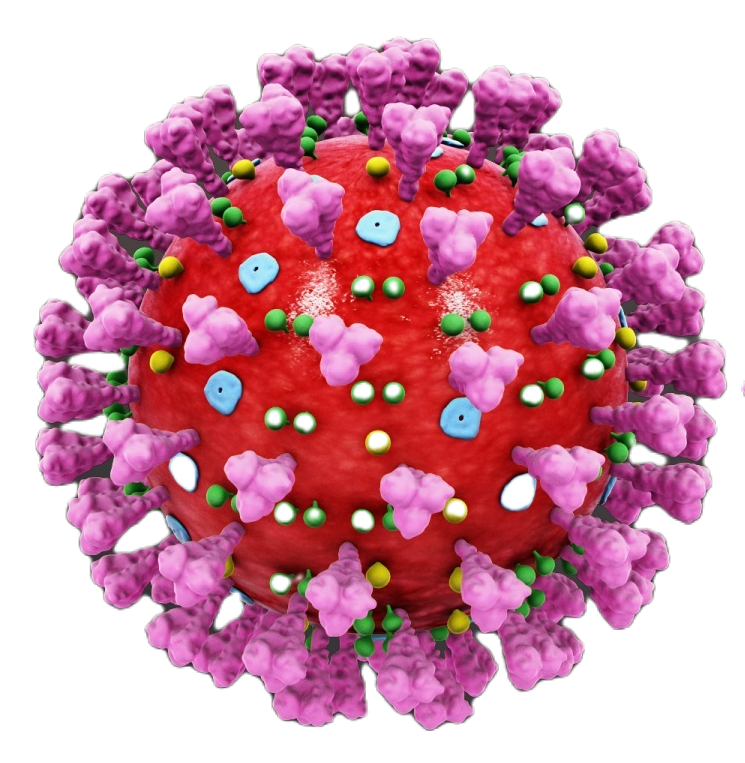 SARS_CoV_2 mutation literature information.
 PMID:
PMID:  2021
2021
 PLoS pathogens

 Browser Board
 Co-occurred Entities
 Filtrator
 ViMRT
ViMRT