Abstract: The second group is almost exclusively focused to the RBD-ACE2 interface and fails to neutralize pseudoviruses carrying the E484K or N501Y substitutions.
Genomics and epidemiology of a novel SARS-CoV-2 lineage in Manaus, Brazil.
Abstract: Through genome sequencing of viruses sampled in Manaus between November 2020 and January 2021, we identified the emergence and circulation of a novel SARS-CoV-2 variant of concern, lineage P.1, that acquired 17 mutations, including a trio in the spike protein (K417T, E484K and N501Y) associated with increased binding to the human ACE2 receptor.
Introduction: Lineage P.1 contains 10 new amino acid mutations in the virus spike protein (L18F, T20N, P26S, D138Y, R190S, K417T, E484K, N501Y, H655Y,
Emergence in southern France of a new SARS-CoV-2 variant harbouring both N501Y and E484K substitutions in the spike protein.
Introduction: Almost all the spike genes of sequences in these lineages carry the N501Y mutation at a key receptor binding domain (RBD) site that increases the affinity of the spike protein for human ACE2 receptors by ~2.1-3.5 fold.
Introduction: Although both the K417N and K417T mutations can reduce the affinity of spike for ACE2, in conjunction with the N501Y and E484K mutations ACE2 binding is restored to that of wild-type Spike.
Method: This list of mutations was merged with the list of deletion mutations that characterize the different 501Y lineages and the three cardinal 501Y lineage signature
Estimation of secondary household attack rates for emergent SARS-CoV-2 variants detected by genomic surveillance at a community-based testing site in San Francisco.
Result: Notably, mutations at spike position 501 were not observed, and thus no instances of the B.1.1.7 strain or any other strain bearing the N501Y mutation were detected in any sample during this period.
Discussion: At the time of this sampling, no instances of B.1.1.7, or independent N501Y mutations were detected in our sample population of 830, despite sporadic observations elsewhere in CA (approximately 3% [69/2423] of genomes reported in California during the January study period; accessed from GISAID Feb 24, 2021).
Discussion: In addition to the mutations associated with spike L452R in the West Coast variants, we observed, at lower frequencies, other mutations of interest, including those in spike at positions 677, and 681, both of which have been reported previous
Detection of a SARS-CoV-2 variant of concern in South Africa.
Abstract: Here we describe a newly arisen lineage of SARS-CoV-2 (designated 501Y.V2; also known as B.1.351 or 20H) that is defined by eight mutations in the spike protein, including three substitutions (K417N, E484K and N501Y) at residues in its receptor-binding domain that may have functional importance3-5.
The SARS-CoV-2 Y453F mink variant displays a pronounced increase in ACE-2 affinity but does not challenge antibody neutralization.
PMID: 33716040
2021
The Journal of biological chemistry
8Discussion: The N501Y mutant is a part of a novel strain, ""Variant of Concern 202012/01""/B.1.1.7, that has accumulated 17 mutations:8 of them in the spike gene:and in some areas of England may account for most of the new cases at the time of writing."
Introduction: At present, two new RBD variants known as N439K and N501Y have been found in humans.
Discussion: Recently, three new genetic mutations inducing residue changes in the RBD have been reported in Europe, that is, N439K, Y453F, and N501Y.
Discussion: The functional properties of the N501Y mutant variant are not yet established.
Discussion: This follows in
Neutralising antibody escape of SARS-CoV-2 spike protein: Risk assessment for antibody-based Covid-19 therapeutics and vaccines.
Abstract: The Spike protein has different hotspots of mutation and deletion, the most dangerous for immune escape being the ones within the receptor binding domain (RBD), such as K417N/T, N439K, L452R, Y453F, S477N, E484K, and N501Y.
Conclusion: 197 Given the reported reduced neutralisation by vaccine-elicited antibodies against single to triple K417N + E484K + N501Y mutants, 96 it is likely that vaccines may need to be updated periodically to avoid potential loss of clinical efficacy, and in this regard mRNA vaccines are likel
Efficacy of the ChAdOx1 nCoV-19 Covid-19 Vaccine against the B.1.351 Variant.
PMID: 33725432
2021
The New England journal of medicine
Introduction: The RBD mutations include the N501Y mutation, which is associated with increased affinity of SARS-CoV-2 to the angiotensin-converting enzyme 2 (ACE2) receptor.
Introduction: The B.1.1.7 (N501Y.V1) lineage, first identified in the United Kingdom, includes the N501Y mutation, which has been associated with 53% increased transmissibility.
Introduction: The B.1.351 (N501Y.V2) lineage first identified in South Africa contains the three RBD mutations and five additional NTD mutations.
Result: Six of 13 vaccine recipients (46%) without evidence of previous SARS-CoV-2 infection showed no neutralization activity against an RBD triple-mutant pseudovirus (containing
Stay-At-Home Orders Are Associated With Emergence of Novel SARS-CoV-2 Variants.
Discussion: Three of these mutations - K4017T, E484K, and N501Y - are present in the receptor-binding domain, which is critical for ligand-receptor interaction, and were similar to the three mutations detected in the South African B1.351 lineage.
Emergence in southern France of a new SARS-CoV-2 variant harbouring both N501Y and E484K substitutions in the spike protein.
Conclusion: Apparently, the N501Y mutation in sRBD provides significant edges for the virus to proliferate; therefore, continued studies on the interaction between sRBD and hACE2 are warranted for the development of treatments against COVID-19.
Conclusion: In a more recent study [14], it was further validated that N501Y together with N501F, N501W and N501V exhibited enhanced binding affinity between sRBD and hACE2 in vitro.
Conclusion: In summary, our in silico studies suggest that the N501Y mutation can enhance sRBD binding affinity with hACE2 and potentially cause the virus to evade antibody neutralization.
Conclusion: It only took the parental strain one passage to start exhibiting and accumulating the



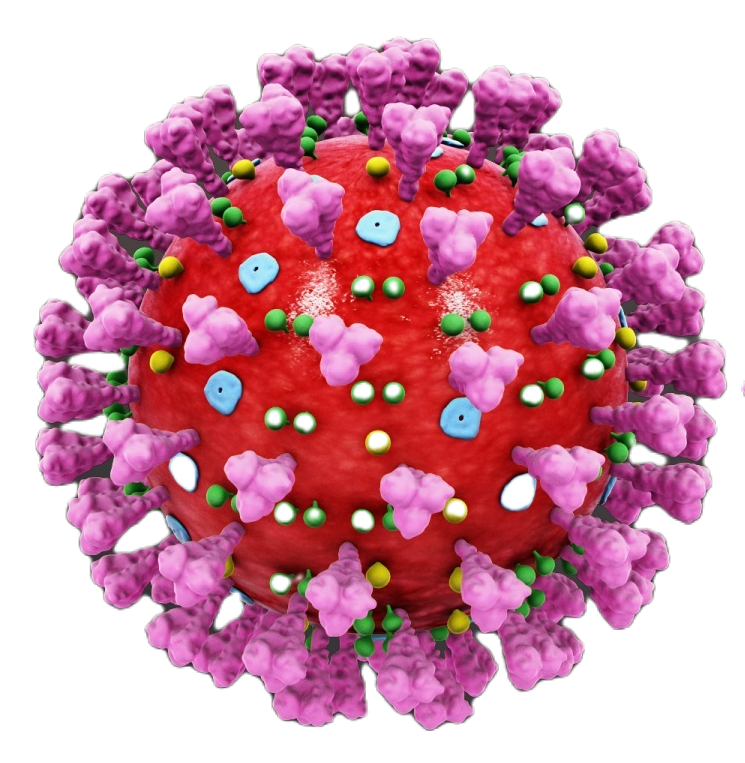 SARS_CoV_2 mutation literature information.
 PMID:
PMID:  2021
2021
 bioRxiv

 Browser Board
 Co-occurred Entities
 Filtrator
 ViMRT
ViMRT