Introduction: The beta variant bears genetic changes in the functional domain of the SARS-CoV-2 spike (S) protein including substitutions in the receptor-binding domain (RBD) (E484K, N501Y and K417N), four substitutions and a deletion in N-terminal domain (NTD) (L18F, D80A, D215G, L242H and R246I) and substitutions in S2 (D614G and A701V) regions.
Evasion of vaccine-induced humoral immunity by emerging sub-variants of SARS-CoV-2.
Introduction: Beta+R346K and Mu+K417N share the same haplotype with R346K, K417N, E484K and N501Y mutations in the receptor-binding domain (RBD) in the spike protein, as shown in Figure 2.
Introduction: In June, another variant harboring E484K and R346K was found in Angola with low neutralization titer against mRNA1273 vaccinated serum.
Discussion: A.VOI.V2 harbors R346K, T478R and E484K in the RBD.
Discussion: reported that neutralization efficacy was reduced for the Mu variant har
Insights into SARS-CoV-2's Mutations for Evading Human Antibodies: Sacrifice and Survival.
PMID: 33834772
2022
Journal of medicinal chemistry
Method: To simulate the binding between the RBD of the South Africa variant and ACE2, we obtained the crystal structure (PDB entry 6M0J) for the RBD-ACE2 complex and introduced three mutations (N501Y, K417N, and E484K) when preparing the .psf and .pdb files for the complex.
Discussion: Before the E484K mutation, E484 forms a hydrogen bond with F490 (Figure S5), which attaches the loop (residues 477-486) to the remainder of the RBD.
Discussion: In the South Africa variant (501Y.V2), actually there are two more mutations, N501Y and E484K.
Discussion: Therefore, the gain from the improved RBD-ACE2 binding that resulted from
First importations of SARS-CoV-2 P.1 and P.2 variants from Brazil to Spain and early community transmission.
PMID: 34099945
2022
Enfermedades infecciosas y microbiologia clinica
Abstract: The exportation of the P.2 variant, carrying the E484K mutation, deserves attention.
Conclusion: The P.2 variant carrying the E484K concern mutation is also reported here, imported by two other travellers who remained asymptomatic.
Introduction: A recent alarm has raised in the UK due to the acquisition of the same E484K mutation in 28 cases infected with the B.1.1.7 variant.
Introduction: However, P.2 carries the E484K substitution, shared by the P.1 and B.1.351 variants, which maps in the RBD (receptor binding domain) of the spike protein.
SARS-CoV-2 infections in mRNA vaccinated individuals are biased for viruses encoding spike E484K and associated with reduced infectious virus loads that correlate with respiratory antiviral IgG levels.
Abstract: A severe acute respiratory syndrome coronavirus 2 (SARS-CoV-2) B.1.1.345 variant carrying the E484K mutation was detected in 4 patients with no apparent epidemiological association from a hospital network in upstate New York.
Post-Vaccination Severe Acute Respiratory Syndrome Coronavirus 2 (SARS-CoV-2) Infections and Incidence of the Presumptive B.1.427/B.1.429 Variant Among Healthcare Personnel at a Northern California Academic Medical Center.
Abstract: In pseudovirus neutralization studies, LY-CoV1404 retains potent neutralizing activity against numerous variants including B.1.1.7, B.1.351, B.1.617.2, B.1.427/B.1.429, P.1, B.1.526, B.1.1.529, and the BA.2 subvariant and retains binding to spike proteins with a variety of underlying RBD mutations including K417N, L452R, E484K, and N501Y.
Spike protein cleavage-activation mediated by the SARS-CoV-2 P681R mutation: a case-study from its first appearance in variant of interest (VOI) A.23.1 identified in Uganda.
Abstract: The A.23 viral lineage, characterized by three spike mutations F157L, V367F and Q613H, was first identified in COVID-19 cases from a Ugandan prison in July 2020, and then was identified in the general population with additional spike mutations (R102I, L141F, E484K and P681R) to comprise lineage A.23.1 by September 2020, with this virus being designated a variant of interest (VOI) in Africa and with subsequent spread to 26 other countries.
Introduction: This lineage then spilled into the general population adding additional spike mutations (R102I, PMID: 34240429
2022
Allergy
Result: In contrast, the introduction of a single E484K mutation in the RBD (RBDE484K) did not affect receptor affinity (shown in Figure 2D,F).
Result: In parallel, we have produced RBD of the isolate P.1 exhibiting RBD with three-point mutations (RBDTRIP) namely K417N, a lysine (K) to asparagine (N) at position 417, E484K, a glutamate (E) to lysine at position 484 and N501Y, an asparagine (N) to tyrosine (Y) at position 501, two of which are located in the RBM (E484K, N501Y; shown in Figure 1A).
Table: E484K
Discussion: In contrast, E484K (found B.1
An Update on Severe Acute Respiratory Syndrome Coronavirus 2 Diversity in the US National Capital Region: Evolution of Novel and Variants of Concern.
Result: Only a subset of B.1.1.207 carried S:E484K, and this lineage has dropped off in frequency.
Result: Others, such as S:P681H, S:L452R, N:R203K, and S:E484K, were present in multiple lineages and showed an undulating pattern (Supplementary Table 2).
Result: The most common lineage to carry S:E484K was a subset of B.1.1.207 (46 samples), which also carried the S:P681H mutation, followed by lineage R.1 (40 samples).
Result: The other lineage, B.1.1.318 within our population with both



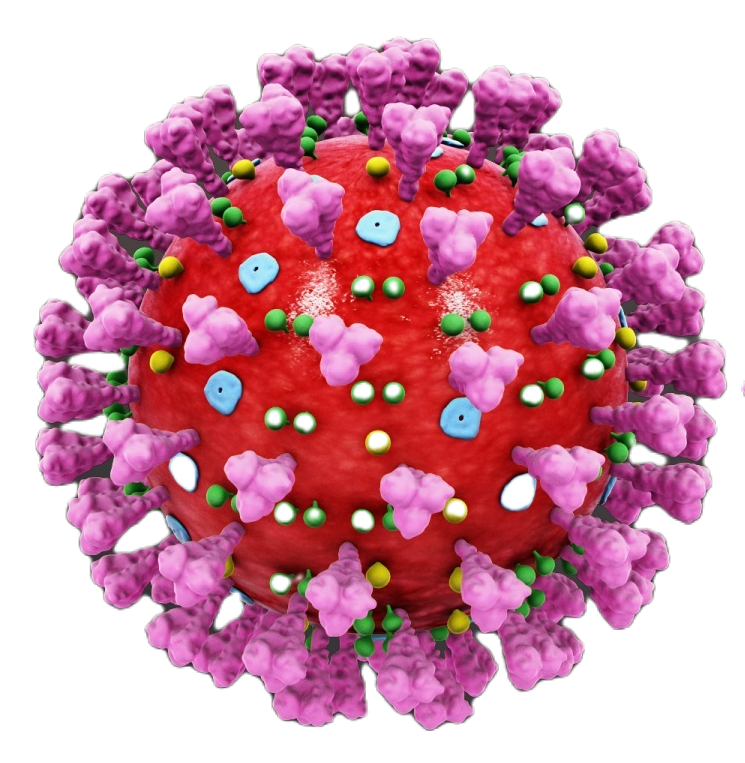 SARS_CoV_2 mutation literature information.
 PMID:
PMID:  2022
2022
 BMC medicine

 Browser Board
 Co-occurred Entities
 Filtrator
 ViMRT
ViMRT