Method: The following variant spikes were made (SA, Alpha and mink) (all mutations listed with reference to the NCBI sequence YP_009724390.1): 2P Alpha (Delta69-70, Delta144, N501Y, A570D, D614G, P681H, T716A, S982A, D1118H, and K986P, V987P), FUR2P Alpha (Delta69-70, Delta144, N501Y, A570D, D614G, T716A, S982A, D1118H, and R682S, R685S, K
Identifying SARS-CoV-2 Variants of Concern through saliva-based RT-qPCR by targeting recurrent mutation sites.
Method: SARS-CoV-2 TaqMan Assays for S substitutions K417T, E484K, E484Q, and L452R were performed per manufacturer's instructions (Thermo Fisher) with 4 muL of template.
Result: Amplification failure was expected and occurred for strains lacking both reference and mutation sequences at the locus (e.g., B.1.351 lacks both alleles at K417T, B.1.351 and P.1 lack both alleles at E484Q, and B.1.617.1 lacks both alleles at E484K) which indicates high specificity of all assays performed on synthetic RNA.
Result: Furthermore, of the 96 replicates that produced an inconclusive result, 74 were due to the presence of an alternate allele: 70 replicates containing E484K (B.1.351 an
Vaccine-Induced Antibody Responses against SARS-CoV-2 Variants-Of-Concern Six Months after the BNT162b2 COVID-19 mRNA Vaccination.
Discussion: Amino acid changes in spike proteins of variants contribute to immune evasion, and it has been suggested that N501Y is associated with increased infectivity, whereas L452R, T478K, and E484K with K417N reduce the interaction of neutralizing antibodies with RBD.
Discussion: However, Eta with slightly reduced neutralization results has solely an E484K substitution, indicating that the E484K substitution alone is not able to substantially decrease the neutralization efficacy of vaccine-induced antibodies.
Discussion: Similar findings have been observed by others, and especially amino acid change E484K in Beta has been linked
Insights into the structure and dynamics of SARS-CoV-2 spike glycoprotein double mutant L452R-E484Q.
Introduction: Another variant, B.1.351 (Mwenda et al.) and P.1 variant (Francisco et al.) carries 9 and 11 spike protein mutations, respectively, including 3 mutations in the receptor-binding domain (RBD), K417N/T, E484K, and N501Y.
Characterization of SARS-CoV-2 Variants B.1.617.1 (Kappa), B.1.617.2 (Delta), and B.1.618 by Cell Entry and Immune Evasion.
Introduction: Also, the E484Q mutation is similar to the E484K mutation found in the B.1.351 variant, which exhibited reduced neutralization by convalescent-phase sera or monoclonal antibodies.
Introduction: B.1.618 harbors Delta145-146 (deletion of the 145th and 146th residues) and an E484K mutation in the NTD and RBD, respectively.
Introduction: For the Kappa and Delta variants, this is the first time that L452R and E484Q (Kappa)/T478K (Delta) mutations have been found to coexist and the first time that P681R has been observed; for B.1.618, this is the first time the combination of Delta145-146 in the NTD domain and E484K has been observed.
Introduction: In
Fractionation of sulfated galactan from the red alga Botryocladia occidentalis separates its anticoagulant and anti-SARS-CoV-2 properties.
PMID: 35337800
2022
The Journal of biological chemistry
Abstract: We observed distinct affinities of BoSG derivatives for the S-proteins of different SARS-CoV-2 strains, including WT, N501Y (Alpha), K417T/E484K/N501Y (Gamma), and L542R (Delta) mutants, a
Introduction: The emergence of a triple-mutated variant (K417T, E484K, N501Y, B.1.1.28), referred to as Gamma SARS-CoV-2, has been reported in Brazil.
Result: 5F), and Gamma K417T/E484K/N501Y.
Result: some affinity for the Gamma K417T/E484K/N501Y mutant.
A screening strategy for identifying the dominant variant of SARS-COV-2 in the fifth peak of Kurdistan- Iran population using HRM and Probe-based RT-PCR assay.
PMID: 35271889
2022
Journal of virological methods
Method: Finally, a 598 PCR product containing L452R, E484K/Q, T478K, and D614G were synthesized, and then sequencing was done.
Method: Samples with the positive result for del69-70, E484K, E484Q, D614G, and Table: E484K
Figure: C) Amplification curves E484K using E484K primers and probes.
Figure: Schematic of the mutations del69-70, E484K, E484Q, D614G, L452R, and T478K that were selected for dominant variant screening.b.
SARS-CoV-2 Omicron variant: Immune escape and vaccine development.
Introduction: Although E484K is not known to exist in the Omicron variant, the analogous E484A can be reasonably speculated to perform a similar role.
Introduction: However, in the presence of E484K, the protection range could be extended.
Introduction: Interestingly, the presence of the K417N mutation did not affect spike-ACE2 binding affinity but produced positive cooperativity with E484K/N501Y.
Introduction: Three of these mutations are in position 477 (S477N, S477G, and S477R) and four in position 484 (E484A, E484D, E484G<
Optimization and Application of a Multiplex Digital PCR Assay for the Detection of SARS-CoV-2 Variants of Concern in Belgian Influent Wastewater.
Introduction: Multiple methods have been developed targeting single-nucleotide polymorphisms (e.g., N501Y and E484K) or characteristic deletions (e.g., spike SDelta69/70 deletion and ORF1a Delta3675-3677) in the genome (often the spike domain) of the SARS-CoV-2 virus.
Clinical Evaluation of a Fully-Automated High-Throughput Multiplex Screening-Assay to Detect and Differentiate the SARS-CoV-2 B.1.1.529 (Omicron) and B.1.617.2 (Delta) Lineage Variants.
Result: The clinical sample set notably included SARS-CoV-2 lineages with P681H (non-N679K), Del-HV69-70 (non-A67V), E484K and E484Q sequence variances (e.g., B.1.1.7 (Alpha), B.1.351 (Beta), and B.1.617.1 (Kappa)).



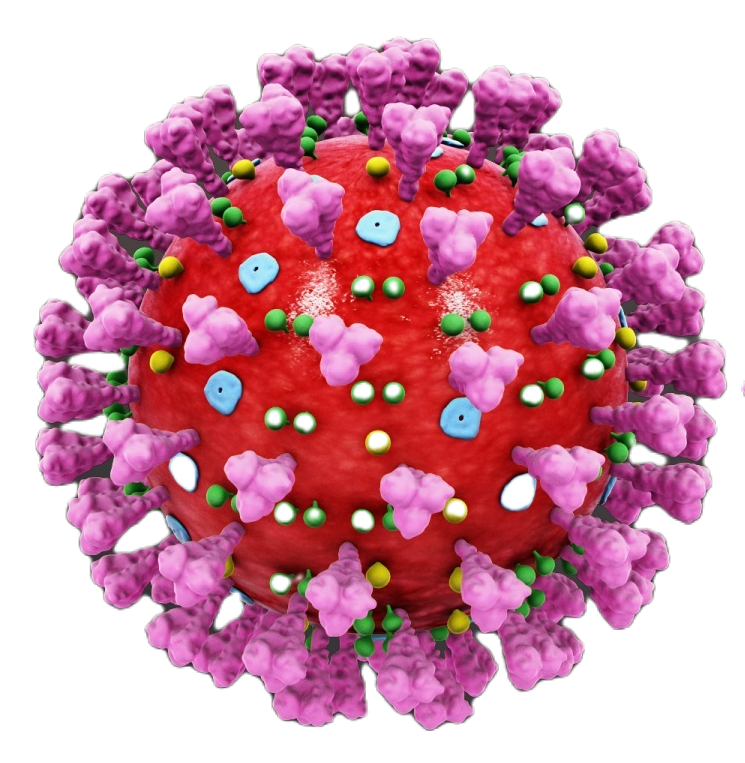 SARS_CoV_2 mutation literature information.
 PMID:
PMID:  2022
2022
 Nature communications

 Browser Board
 Co-occurred Entities
 Filtrator
 ViMRT
ViMRT