Neutralisation Hierarchy of SARS-CoV-2 Variants of Concern Using Standardised, Quantitative Neutralisation Assays Reveals a Correlation With Disease Severity; Towards Deciphering Protective Antibody Thresholds.
Introduction: As the pandemic progressed, a number of single amino acid mutations in the Spike protein were detected, such as D614G and A222V.
Introduction: Referred to as Cluster 5 or B.1.1.298, several different groups of mutations were identified, with the most abundant population containing missense and deletion mutations on the Spike; 69/70del, Y453F and D614G.
Introduction: The D614G mutation was found to increase the density of Spike protein on virions and infectivity.
Table: D614G
Split T7 promoter-based isothermal transcription amplification for one-step fluorescence detection of SARS-CoV-2 and emerging variants.
Conclusion: Finally, (v) broad applicability was verified through the multiplex detection of the SARS-CoV-2 variants (D614G mutation) as well as through the direct detection of bacterial 16S rRNA without the need for additional nucleic acid purification.
Introduction: D614G), conferring greater infectivity and more rapid spread, have become predominant in various regions.
Introduction: Moreover, STAR was utilized for multiplex detection of the D614G mutation and N gene of SARS-CoV-2 in a single tube as well as for the direct detection of bacterial 16S rRNA without additional nucleic acid purification, thereby confirming the wide applicability of this method for nucleic acid biomarker detection.
Result: 5B indicate that G at N4 minimized the background noise in the presence of the wild-type target while generating a high fluorescence sign
Durability and Cross-Reactivity of SARS-CoV-2 mRNA Vaccine in Adolescent Children.
1Abstract: We tested the durability and cross-reactivity of anti-SARS-CoV-2 serologic responses over a six-month time course in vaccinated adolescents agains
3Introduction: Here, we quantified relative antibody responses in adolescent children immediately following the Pfizer-BioNTech mRNA vaccination and six months post-inoculation and analyzed the efficacy of the humoral response against the D614G (""wild type"") SARS-CoV-2 and latest variant of concern (VOC), Omicron."
4Method: Serological analyses were performed using an in-house enzyme-linked immunosorbent assay (ELISA) that detects IgG against the D614G (""wild type"") SARS-CoV-2 Spike, the D614G (""wild type"") Receptor-Binding Domain (RBD), or the Omicron SARS-CoV-2 VOC RBD by using the previously described method."
Characteristic analysis of Omicron-included SARS-CoV-2 variants of concern.
Discussion: In July 2020, a strain with the spike protein D614G mutation was discovered in Europe and subsequently became the main form of the virus pandemic.
Discussion: In the Alpha and Omicron strains, two key deletions, H60V70, are on the epitope, which can affect the immune escape of the S protein (Figure 4F), whereas N501Y and D614G have almost no effect on the antigen score, and the P681 mutation slightly reduces the epitope score and may have a certain impact.
Discussion: The RBD regions of Alpha, Beta, Delta, and Omicron strains are more exposed, and the junction between the variants S protein and the virion has a prominent structure, which may be caused by the D614G mutation.
Antigenicity comparison of SARS-CoV-2 Omicron sublineages with other variants contained multiple mutations in RBD.
Abstract: Among them, D614G, B.1.640.1, and B.1.630 formed a cluster, C.1.2 and B.1.640.2 formed a cluster, and BA.1, BA.2, and BA.3 formed a cluster.
Method: D614G (GISAID: EPI_ISL_766872), BA.1 (GISAID: EPI_ISL_6590782.2), BA.2 (GISAID: EPI_ISL_7644798), BA.3 (GISAID: EPI_ISL_7740765), C.1.2 (GISAID: EPI_ISL_8801147), B.1.630 (GISAID: EPI_ISL_6368831), B.1.640.1 (GISAID: EPI_ISL_8013598), and B.1.640.2 (GISAID: EPI_ISL_8376567) spike protein expression plasmids are all entrusted to General Biology (Anhui) Co., Ltd.
Method: Briefly, 293T cells were first transfected with the SARS-CoV-2 spike protein expression plasmids of D614G or VOCs/VOIs (Alpha, Beta, Gamma, Delta, Lambda, Mu, and Omicron).
Method: Each guinea pig was subcutaneously immunized with 100 mug of purified spik
Role of the Microbiome in the Pathogenesis of COVID-19.
PMID: 35433495
2022
Frontiers in cellular and infection microbiology
Abstract: Soon after the first outbreak due to the wild-type strain in December 2019, a genetic variant D614G emerged in late January to early February 2020 and became the dominant genotype worldwide.
Conclusion: The two most commonly occurring mutations, Spike_D614G and Nsp12_P314L, were structurally modeled, which showed that these mutations had the potential to enhance viral entry and replication, respectively.
Introduction: Among these, the D614G clade was the most common and was first found in late January 2020 in China, according to a study conducted by.
Introduction: Earliest samples from the USA appeared to have been derived from China and belonged to basal or L84S
Table: D614G
Prolonged shedding of infectious viruses with haplotype switches of SARS-CoV-2 in an immunocompromised patient.
PMID: 35430092
2022
Journal of infection and chemotherapy
Conclusion: When haplotype 1 was compared with Wuhan-Hu-1/2019 (GenBank accession number; MN908947), it had ten non-synonymous (ORF1a:Q2702H and S2981F, ORF1b:P314L, T1404 M, P1567L, and R2684I, S gene:D614G, N gene:R203K, G204R, and M234I) and five synonymous mutations.
Comparative genomics, evolutionary epidemiology, and RBD-hACE2 receptor binding pattern in B.1.1.7 (Alpha) and B.1.617.2 (Delta) related to their pandemic response in UK and India.
PMID: 35427787
2022
Infection, genetics and evolution
Abstract: First, we served comparative genomics, such as genome sequence submission patterns, mutational landscapes, and structural landscapes of significant mutations (N501Y, D614G, L452R, E484Q, and P681R).
Abstract: The structural pattern was analyzed in the N501Y, D614G L452R, E484Q, and P681R mutations.
Result: Again, like the previous point AA mutation, we also evaluated the D614G mutation, which was identified as the B.1.1.7 variant.
Result: In the D614G structure, the amino acid changed from Asp614 Gly.|mg
Pathogenicity of SARS-CoV-2 Omicron (R346K) variant in Syrian hamsters and its cross-neutralization with different variants of concern.
Method: On deep sequencing following amino acid changes were found in the isolate.(NSP5_P132H,Spike_T95I,Spike_K417N,Spike_S373P,Spike_Q493R,Spike_N969K, Spike_H655Y,Spike_N856K,N_R203K,Spike_S371L,NSP3_A1892T, PMID: 35401825
2022
Theranostics
3Introduction: For example, the D614G variant, which was first identified in July 2020, has a faster infection rate and higher viral load in the upper respiratory tract than the wild-type ""Wuhan-Hu-1"" strain."
Abstract: In addition, similar results were obtained using a SARS-CoV-2 pseudovirus neutralization assay specific for wild-type S and five prevalent S variants (D614G, B.1.1.7, B.1.351, P.1, B.1.617.2), thus demonstrating that high antibody diversity is associated with high NAb titers.
Introduction: The B.1.1.7 variant (D614G, N501Y) is more infectious and may lead to increased mortality compared to the parental strain.
Result: Consistent with the observation that the trimerized form of the D614G
 ViMRT
ViMRT



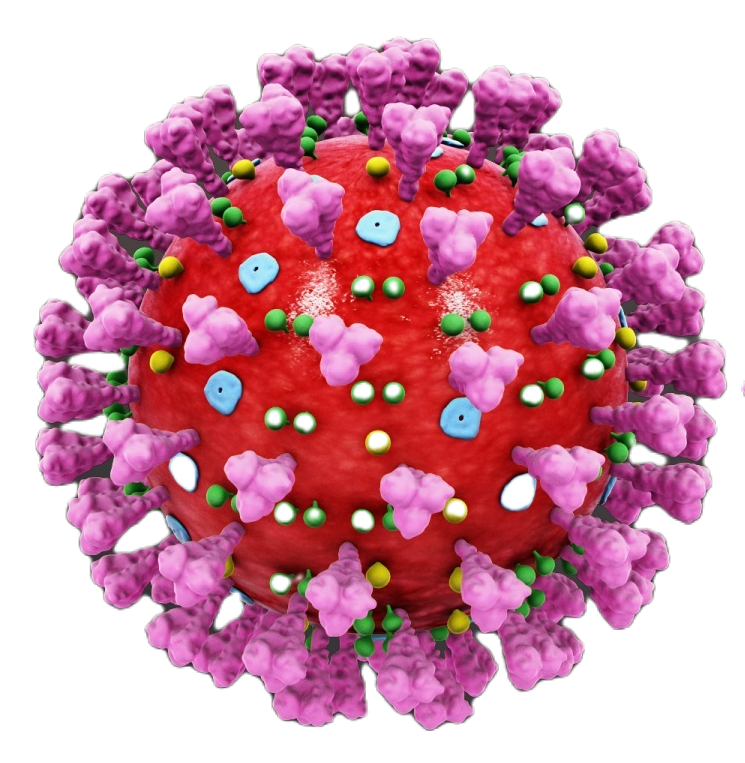 SARS_CoV_2 mutation literature information.
 PMID:
PMID:  2022
2022
 Frontiers in immunology