Conclusion: Finally, (v) broad applicability was verified through the multiplex detection of the SARS-CoV-2 variants (D614G mutation) as well as through the direct detection of bacterial 16S rRNA without the need for additional nucleic acid purification.
Introduction: D614G), conferring greater infectivity and more rapid spread, have become predominant in various regions.
Introduction: Moreover, STAR was utilized for multiplex detection of the D614G mutation and N gene of SARS-CoV-2 in a single tube as well as for the direct detection of bacterial 16S rRNA without additional nucleic acid purification, thereby confirming the wide applicability of this method for nucleic acid biomarker detection.
Result: 5B indicate that G at N4 minimized the background noise in the presence of the wild-type target while generating a high fluorescence sign
Efficacy of vaccination and previous infection against the Omicron BA.1 variant in Syrian hamsters.
Introduction: Here, in the hamster model, we addressed these issues under controlled conditions using the Omicron variant and isolates that are no longer circulating in nature (i.e., a Wuhan-like isolate and an isolate with only a D614G spike mutation).
Mutation rate of SARS-CoV-2 and emergence of mutators during experimental evolution.
PMID: 35419205
2022
Evolution, medicine, and public health
Abstract: Methodology: We performed experimental evolution with two strains of SARS-CoV-2, one carrying the originally described spike protein (CoV-2-D) and another carrying the D614G mutation that has spread worldwide (CoV-2-G).
Conclusion: Assuming that the D614G genotype is better adapted than its ancestor in Vero cells, this observation is consistent with the hypothesis that fitter genotypes adapt at a slower pace.
Conclusion: Here, we followed the evolution in cells of two strains of SARS-CoV-2: one with the original spike protein (CoV-2-D) and one carrying the D614G mutation (CoV
Result: This D614G mutation in the spike protein emerged early in the pandemic, increased the infectivity of the virus and became prevalent worldwide.
Pathogenicity of SARS-CoV-2 Omicron (R346K) variant in Syrian hamsters and its cross-neutralization with different variants of concern.
Method: On deep sequencing following amino acid changes were found in the isolate.(NSP5_P132H,Spike_T95I,Spike_K417N,Spike_S373P,Spike_Q493R,Spike_N969K, Spike_H655Y,Spike_N856K,N_R203K,Spike_S371L,NSP3_A1892T, PMID: 35403837
2022
Advanced science (Weinheim, Baden-Wurttemberg, Germany)
Abstract: Pseudotyped and authentic virus-based assays show that COVID-HIG displays broad-spectrum neutralization effects on a wide variety of SARS-CoV-2 variants, including D614G, Alpha (B.1.1.7), Beta (B.1.351), Gamma (P.1), Kappa (B.1.617.1), Delta (B.1.617.2), and Omicron (B.1.1.529) in vitro.
Inhibitor screening using microarray identifies the high capacity of neutralizing antibodies to Spike variants in SARS-CoV-2 infection and vaccination.
3Introduction: For example, the D614G variant, which was first identified in July 2020, has a faster infection rate and higher viral load in the upper respiratory tract than the wild-type ""Wuhan-Hu-1"" strain."
Abstract: In addition, similar results were obtained using a SARS-CoV-2 pseudovirus neutralization assay specific for wild-type S and five prevalent S variants (D614G, B.1.1.7, B.1.351, P.1, B.1.617.2), thus demonstrating that high antibody diversity is associated with high NAb titers.
Introduction: The B.1.1.7 variant (D614G, N501Y) is more infectious and may lead to increased mortality compared to the parental strain.
Result: Consistent with the observation that the trimerized form of the D614G PMID: 35346184
2022
BMC medicine
Abstract: The anti-RBD IgG antibodies from these vaccinated individuals were broadly cross-reactive against multiple VOCs and had neutralisation potency against original D614G, beta, and delta variants.
Figure: D Magnitude of neutralisation activity against the beta, D614G, and delta variants in pre- and post-vaccination sera.
Figure: E Number of individuals with neutralisation activity against Beta or D614G or Delta variants in pre- and post-vaccination sera.
Figure: Magnitude of neutralisation activity against the original variant (D614G) in first wave sera with varying concentrations of A anti-Spike IgG and B anti-RBD IgG antibodies.
Figure: The Spike and PMID: 35349821
2022
Biochemical and biophysical research communications
Introduction: reported the detection of D614G (nucleotide mutation: A23403G) and L452R (nucleotide mutation: T22917G) variations in the SARS-CoV-2 spike protein by post-PCR HRM analysis, respectively.
Discussion: In the case of detection for the D614G variation (mutation A23403G) reported by Gazali et al., the difference in the Tm value was 0.23 C.
Evasion of vaccine-induced humoral immunity by emerging sub-variants of SARS-CoV-2.
Introduction: As vaccine development was initiated almost immediately after the pandemic started, current major vaccines, including BNT162b2, mRNA1273 and ChAdOx1-S, are all based on the original strain without D614G.
Introduction: One of the salient mutations, spike-D614G, appeared in January 2020 and soon became ubiquitously dominant by April.
SARS-CoV-2-specific antibody and T-cell responses 1 year after infection in people recovered from COVID-19: a longitudinal cohort study.
Figure: (A) Neutralising antibody titres against the original SARS-CoV-2 strain from Wuhan, China (IPBCAMS-WH-01/2019, number EPI_ISL_402123), and the D614G, beta (B.1.351), and delta (B.1.617.2) variants in 141 patients.
Figure: Humoral and cellular immune responses to the original SARS-CoV-2 strain, and the D614G, beta, and delta variants, in recovered patients 12 months after infection.
Discussion: Both the D614G and the delta variants escape from the neutralising antibodies against the original strain, an effect that depends on neutralising antibody titres.
Discussion: However, higher neutralising antibody titres against the original strain contributed to the protection from infection of D614G and delta variants in vitro.
Discussion: However, the D614G variant enhances infectivity mainly



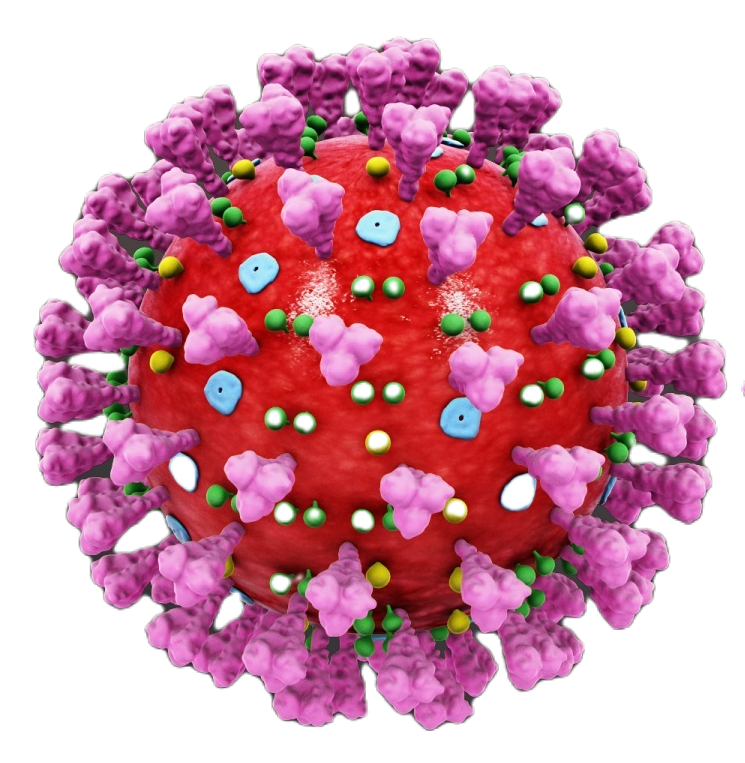 SARS_CoV_2 mutation literature information.
 PMID:
PMID:  2022
2022
 Biosensors & bioelectronics

 Browser Board
 Co-occurred Entities
 Filtrator
 ViMRT
ViMRT