Evolutionary history of the SARS-CoV-2 Gamma variant of concern (P.1): a perfect storm.
PMID: 35266951
2022
Genetics and molecular biology
Introduction: Currently, the WHO has identified the Gamma lineage (B.1.1.28.1, P.1 or Gamma; Nextstrain clade 20J/V3) with the following key S mutations: L18F, T20N, P26S, D138Y, R190S, K417T, E484K, N501Y, D614G, H655Y, T1027I, and V1176F.
Introduction: Key S mutations: L452R, D614G, P681R, +- (E484Q, Q107H,
Tetra-primer ARMS-PCR combined with dual-color fluorescent lateral flow assay for the discrimination of SARS-CoV-2 and its mutations with a handheld wireless reader.
Abstract: Herein, we report a low-cost, facile, and highly sensitive diagnostic platform that can simultaneously distinguish wild-type (WT) SARS-CoV-2 and its two mutations, namely, D614G and N501Y, within 2 h.
Abstract: The WT and M viruses were indicated and were strictly discriminated by the presence of a green or red band on test line 1 for the D614G site and test line 2 for the N501Y site.
Abstract: The limits of detection (LODs) for the WT and M D614G were estimated as 78.91 and 33.53 copies per muL, respectively.
Characterization of SARS-CoV-2 Variants B.1.617.1 (Kappa), B.1.617.2 (Delta), and B.1.618 by Cell Entry and Immune Evasion.
Introduction: For example, the D614G mutation, identified during the earlier stage of the pandemic, promotes spike binding to ACE2, leading to enhanced virus transmission.
Result: To further examine the biological impact of these mutations on cell entry, we produced pseudotyped virus particles containing a firefly luciferase reporter gene and expressing on their surface with the spike proteins of WT (D614G), Kappa, Delta, and B.1.618 variants.
Result: To this end, we used an SARS-CoV-2 tran
Figure: Luciferase activity was determined after 2 days of infection, and data were normalized to the WT (D614G) of the individual experiment.
Figure: This experiment was repeated twice independently, and data were normalized to the WT (D614G) of the individual experiment.
Vaccine-Induced Antibody Responses against SARS-CoV-2 Variants-Of-Concern Six Months after the BNT162b2 COVID-19 mRNA Vaccination.
Abstract: Variants D614G, Alpha, and Eta are neutralized by sera of 100% of vaccinees, whereas neutralization of Delta is 3.8-fold reduced and neutralization of Beta is 5.8-fold reduced compared to D614G.
Introduction: We also analyzed the neutralization capacity of vaccinees' sera on two ancestral strains (Wuhan-like and D614G), three VOCs (Alpha, Beta, and Delta), and one VBM (Eta).
Figure: (a) Neutralization titers against D614G (B.1), original Wuhan-like variant (B), and Delta variant (B.1.617.2) were analyzed in microneutralization test performed in two laboratories (A and B) that use different cell lines (VeroE6-TMPRRS2 versus VeroE6), virus amounts (50 TCID50 versus 100 TCID50), incubation times (4 days versus 3 days), and reference virus strains (B.1 versus B).
Figure: (b) Comparison of MNTs performed with 3- and 4-day incubatio
Evolution of the SARS-CoV-2 spike protein in the human host.
Introduction: The D614G substitution has been shown to decrease shedding of S1 from spike on virions, consistent with increased stability of the pre-fusion conformation.
Introduction: The virus has evolved in the human host during the pandemic and we and others have demonstrated that the predominant D614G substitution, located in a monomer-monomer interface of the spike trimer, increases its propensity to adopt the open conformation that is competent to bind receptor.
Introduction: This enabled us to directly compare the pre-fusion spikes of the new variants with those of the original strain (first identified in Wuhan) and the D614G-only variant we described in previous studies, findings that agree with reports that used non-stabilised spikes.
Antibody evasion properties of SARS-CoV-2 Omicron sublineages.
Introduction: Among these samples, the mean serum neutralizing titres against Omicron sublineages were significantly lower than the mean titre for D614G; although the mean titre was slightly lower for BA.2, the difference from that of the BA.1 sublineages did not reach statistical significance (P = 0.242).
Introduction: As above, neutralizing titres dropped significantly against authentic BA.2 virus relative to D614G.
Introduction: The wild-type D614G pseudovirus was included as a comparator.
Introduction: a marked and significant loss of neutralizing activity of the serum against BA.1+R346K and BA.2 relative to D614G was noted, with neutralizing titres for numerous samples dropping below the limit of detection.
Method: SARS-CoV-2 variants D614G (GISAID: EP
Antibody escape and global spread of SARS-CoV-2 lineage A.27.
Introduction: A.27 is characterized by a mutational profile including L18F, L452R and N501Y in the S protein that combines genetic changes found in various VOCs/VOIs, while lacking the D614G substitution present in most other lineages.
Introduction: Early in the pandemic, SARS-CoV-2 acquired the S D614G substitution that has been associated with increased transmissibility and set the genetic foundation for the large number of B.1 derived lineages.
Introduction: These variants are characterized by specific patterns of concerning S mutations: apart from the D614G substitution, lineage B.1.1.7 has the N501Y amino acid substitution asso
Functional analysis of polymorphisms at the S1/S2 site of SARS-CoV-2 spike protein.
3Introduction: The D614G exchange increases the percentage of S proteins present in the ""open"" conformation required for efficient ACE2 binding and viruses bearing this exchange show accelerated transmission kinetics in animal models."
Introduction: Nevertheless, mutations in SARS-CoV-2 have been detected and viruses with a D614G exchange became dominant early in the pandemic.
Discussion: Why mutant S686G showed enhanced interaction with ACE2 is at present unclear but might be due to its RBD adopting a conformation that may favour ACE2 binding, which would be a similar effect as reported for mutation D614G that is also located outside of the RBD.
Simultaneous detection of SARS-CoV-2 and identification of spike D614G mutation using point-of-care real-time polymerase chain reaction.
PMID: 35257681
2022
Journal of virological methods
Introduction: For the simultaneous detection of SARS-CoV-2 and its variant (D614G mutant), FAM and ROX fluorophores were attached to each probe during probe sequence design to enable target discrimination.
Introduction: In the experiment, the specificity and sensitivity of RdRp and N target primer pairs and probe sets were confirmed in the L clade, chosen to represent viruses containing the target gene without the D614G mutation.
Introduction: In this milieu, we developed a rRT-PCR detection method that simultaneously detects common SARS-CoV-2 and the SARS-CoV-2 D614 strain (a mutant with the replacement of aspartic acid with glycine at position 614 of the spike glycoprotein (S protein)), which has become a major circulating strain worldwid
Omicron variant (B.1.1.529) of SARS-CoV-2: understanding mutations in the genome, S-glycoprotein, and antibody-binding regions.
Abstract: We also evaluated mutations in the antibody-binding regions and observed some important mutations overlapping those of previous variants including N501Y, D614G, H655Y, N679K, and P681H.
Result: Mutations previously reported as important in different variants were
Discussion: The significant mutations and features are N501Y (augments the binding between of S-protein and ACE2); D614G (increase infectivity); H655Y (accelerate transmission); N679K (increase viral transmission); and P681H (enhance binding affinity of S-protein) (Table 2).



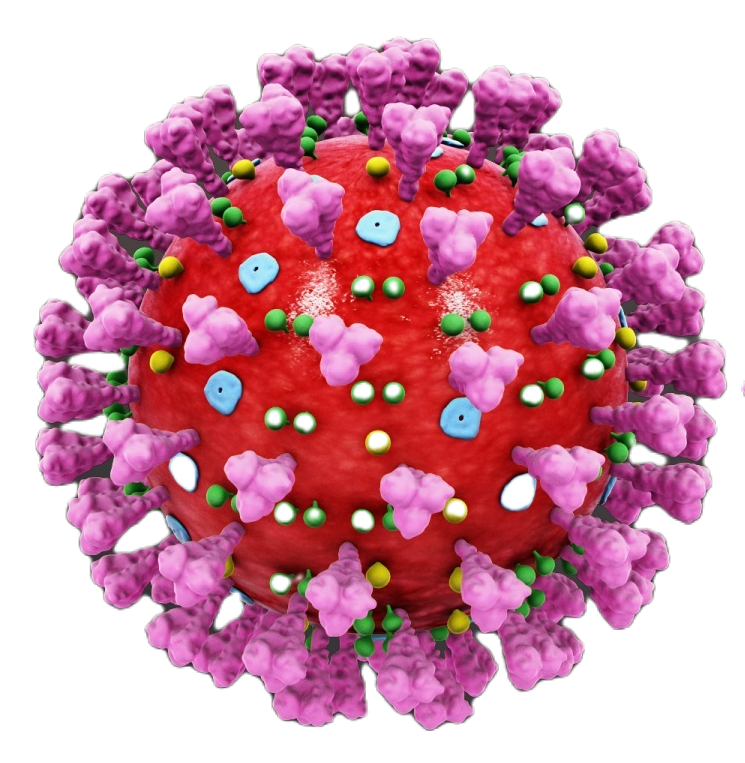 SARS_CoV_2 mutation literature information.
 PMID:
PMID:  2022
2022
 Genetics and molecular biology

 Browser Board
 Co-occurred Entities
 Filtrator
 ViMRT
ViMRT