Introduction: Another mutation in the S-glycoprotein region is D614G, which is associated with immune escape.
Introduction: Few mutations include K417T/N, E484K, L452R, N501Y, P681R, D614G, etc.
Introduction: In this direction, we illustrated the mutations in the RBD region (N439K, L452R, E484K,
Introduction: first reported this novel mutation of D614G, and they concluded that this mutation might be responsible for altered antigenicity and immunogenicity.
Table: D614G
Molecular and Epidemiological Characterization of Emerging Immune-Escape Variants of SARS-CoV-2.
Method: For instance, a Delta variant spike haplotype consisting of T19R, 256_258delinsG,
Result: At 1 week after vaccination, strong neutralization (hiVNT score > 70) of all variants was observed in most of the sera samples, ranging from the highest (95.2%) in D614G to the lowest in the Beta variant (70.6 %) (Figure 3).
Result: The geometric mean titers (GMTs) were 225 for D614G, 38 for Beta, and 37 for Delta + E484K + N501Y (Figure 2A), suggesting that the sera had 6-fold reduced neutralization efficacy against the Beta and Delta variants.
Figure: Since these nAbs are treated as a cocktail, they are considered effective if the EC50 of either antibody is equivalent to or lower than that of the D614G control.
Variants of SARS CoV-2: mutations, transmissibility, virulence, drug resistance, and antibody/vaccine sensitivity.
PMID: 35227008
2022
Frontiers in bioscience (Landmark edition)
Abstract: Mutations in the S protein that are common among several of the variants include D614G that increases transmissibility and viral load and is often associated with P323L on the RNA dependent RNA polymerase.
In-silico genomic landscape characterization and evolution of SARS-CoV-2 variants isolated in India shows significant drift with high frequency of mutations.
PMID: 35233173
2022
Saudi journal of biological sciences
Abstract: The most frequent non-synonymous mutation 486/546 (89.01%) occurred in the S gene (structural gene) at position 23,403 where A changed to G leading to the replacement of aspartic acid by glycine in position (D614G).
Result: The most frequent non-synonymous mutation 486/546 (89.01%) occurred in the S gene at position 23,403 where A changed to G leading to the replacement of aspartic acid by glycine in position (D614G)) Table 3 and.
Table: D614G
Discussion: A23403G (D614G) was observed in West European states in the early stage of the disease and this finding might point towards the source of infection from which it was introduced in India.
Discussion: Moreover, the present study showed that
SARS-CoV-2 Beta and Delta variants trigger Fc effector function with increased cross-reactivity.
Discussion: Here, we showed preservation of Fc effector function against VOCs both in individuals previously infected with the original D614G variant and in individuals vaccinated with Ad26.COV2.S.
Discussion: This is supported by a recent study measuring natural killer (NK) activation, ADCP, ADCD, and ADCC in Ad26.COV2.S vaccinees showing differences of under 2-fold between original D614G and Beta.
Discussion: This was despite the fact that the sequence of immunodominant regions of the eliciting immunogens were the same, with only the single D614G mutation differing between them.
Discussion: We also show subtle differences in the ability of antibodies elicited by either the original D614G or the Ad26.COV2.S vaccine to perform ADCC a
Rapidly Identifying New Coronavirus Mutations of Potential Concern in the Omicron Variant Using an Unsupervised Learning Strategy.
Abstract: To build an investigative framework, we have applied an unsupervised machine learning approach to 4296 Omicron viral genomes collected and deposited to GISAID as of December 14, 2021, and have identified a core haplotype of 28 polymutants (A67V, T95I, G339D, R346K, S371L, S373P, S375F, K417N,
Introduction: Note that we use a polymutant nomenclature without the ending amino acid designated, e.g., D614 as opposed to D614G, because several polymutants exhibit multiple mutations.
Introduction: Some, like D614G, are observed in all three variant families and the impact of this mutation has been well documented.
"VE607 Stabilizes SARS-CoV-2 Spike In the ""RBD-up"" Conformation and Inhibits Viral Entry."
Abstract: The IC 50 values are in the low micromolar range for pseudoparticles derived from SARS-CoV-2 Wuhan/D614G as well as from variants of concern (Alpha, Beta, Gamma, Delta and Omicron), suggesting that VE607 has potential for the development of drugs against SARS-CoV-2 infections.
Travel ban effects on SARS-CoV-2 transmission lineages in the UAE as inferred by genomic epidemiology.
Abstract: The study comprehensively characterized the genomic aspects of the virus and its spread within the UAE and identified that the prevalence shift of the D614G mutation was due to the later introductions of the G-variant associated with international travel, rather than higher local transmissibility.
Conclusion: Moreover, we report a prevalence shift in D614G, but attribute it to change of import origins rather than higher transmissibility of the G-variant.
Result: In addition to the above-mentioned D614G mutation, we observe four cases of a nearby E583D mutation, that could be of diagnostic or clinical relevance (transmissibility and severity).
Result: Prevalence shift of D614G variants.
Figure: A shift of prevalence of strains with D614G mutations.
Tetra-primer ARMS-PCR combined with dual-color fluorescent lateral flow assay for the discrimination of SARS-CoV-2 and its mutations with a handheld wireless reader.
Abstract: Herein, we report a low-cost, facile, and highly sensitive diagnostic platform that can simultaneously distinguish wild-type (WT) SARS-CoV-2 and its two mutations, namely, D614G and N501Y, within 2 h.
Abstract: The WT and M viruses were indicated and were strictly discriminated by the presence of a green or red band on test line 1 for the D614G site and test line 2 for the N501Y site.
Abstract: The limits of detection (LODs) for the WT and M D614G were estimated as 78.91 and 33.53 copies per muL, respectively.
Vaccine-Induced Antibody Responses against SARS-CoV-2 Variants-Of-Concern Six Months after the BNT162b2 COVID-19 mRNA Vaccination.
Abstract: Variants D614G, Alpha, and Eta are neutralized by sera of 100% of vaccinees, whereas neutralization of Delta is 3.8-fold reduced and neutralization of Beta is 5.8-fold reduced compared to D614G.
Introduction: We also analyzed the neutralization capacity of vaccinees' sera on two ancestral strains (Wuhan-like and D614G), three VOCs (Alpha, Beta, and Delta), and one VBM (Eta).
Figure: (a) Neutralization titers against D614G (B.1), original Wuhan-like variant (B), and Delta variant (B.1.617.2) were analyzed in microneutralization test performed in two laboratories (A and B) that use different cell lines (VeroE6-TMPRRS2 versus VeroE6), virus amounts (50 TCID50 versus 100 TCID50), incubation times (4 days versus 3 days), and reference virus strains (B.1 versus B).
Figure: (b) Comparison of MNTs performed with 3- and 4-day incubatio



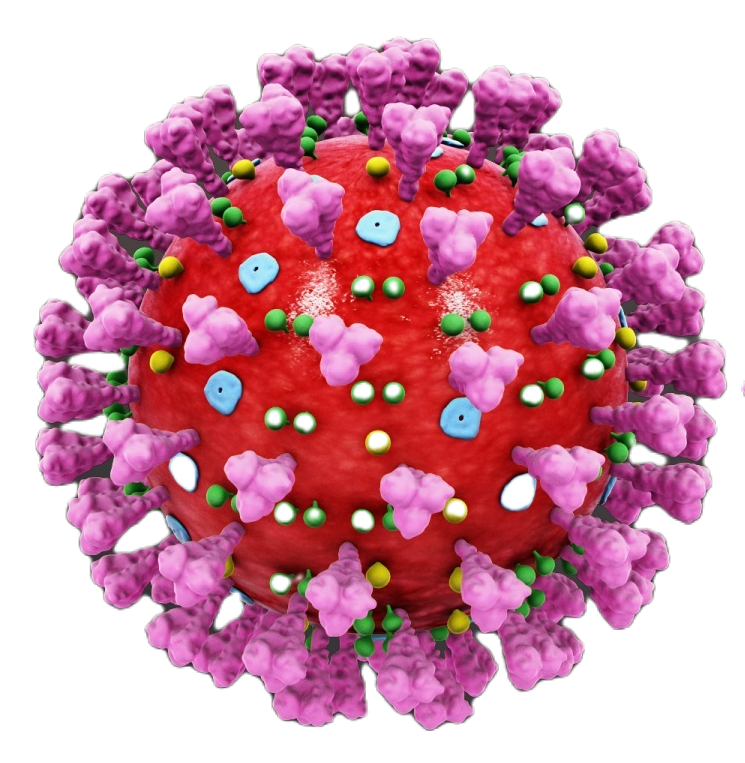 SARS_CoV_2 mutation literature information.
 PMID:
PMID:  2022
2022
 Frontiers in immunology

 Browser Board
 Co-occurred Entities
 Filtrator
 ViMRT
ViMRT