7Figure: As an example, in this tree, the region from approximately 12:30 to 3 o'clock represents GISAID's ""GR"" clade, defined both by mutations we are tracking in this paper that carry the G614 variant (the GISAID G clade, defined by mutations A23403G, C14408T, C3037T, and a mutation in the 5' UTR (C241T, not shown here), and an additional 3-position polymorphism: G28881A + G28882A + G28883C."
Figure: Distribution of A23403G (D614G) Mutation and Other Mutations on an Approximate Phylogenetic Tree Using Parsimony, Related to Figure 7.
Figure: One is in the RdRp protein (nucleoti
RdRp mutations are associated with SARS-CoV-2 genome evolution.
Result: 23403A>G is a nonsynonymous mutation in the surface glycoprotein, while 3037C>T is a synonymous mutation in nsp3, a replication scaffolding protein.
Result: A recent study postulated that one of the co-mutations of 14408C>T, namely 23403A>G that causes D614G mutation in the S protein, may result in a more transmissible form of SARS-CoV-2.
Result: Despite weeks of existence, 23403A>G became the dominant form only after the appearance of the first Italian case with all four mutations on February 20.
Result: In contrast to Europe, North and South America, where 14408C>T became the dominant form together with
Comprehensive Analyses of SARS-CoV-2 Transmission in a Public Health Virology Laboratory.
Result: All samples sequenced were associated with clade 20, harboring the clade's mutations A23403G and C14408T (Nextstrain nomenclature).
Result: As specified, 7/14 mutations were associated with the 20B and 20C clades (Table 3), 4/14 mutations were detected in all sequences compared to the reference sequence (C241T, C3037T, C14408T, A23403G), and the rest of the mutations (3/14) were uniquely observed in S2, S3, S6, S7 and S8 (Table 3).
Discussion: Depending upon whether these mutations are beneficial for the virus, they may survive and be transmitted over time, for example, as occurred with the emerging clade 20-associated mutation A23403G/D614G that changed aspartate (acidic group) to gly
Global cataloguing of variations in untranslated regions of viral genome and prediction of key host RNA binding protein-microRNA interactions modulating genome stability in SARS-CoV-2.
Result: Another study reported that this variant has co-evolved with three coding region mutations (3037C > T, 14408C > T, and 23403A > G) of nsp3, RNA primase and spike glycoprotein.
Geographic and Genomic Distribution of SARS-CoV-2 Mutations.
5Result: Specifically, the four mutations C241T, C3037T, C14408T, and A23403G are observed in all samples from the clade ""G"" (named after the Spike D614G mutation) and its two derivative GH (further characterized by the ORF3a:Q57H mutation) and GR (affected by the trinucleotide mutation in the Nucleocapsid gene, inducing a RG203KR mutation)."
Result: The most prevalent mutation in sequenced genomes worldwide is a transversion affecting the 23,403rd nucleotide adenosine (Supplementary File 6), transformed into a guanosine (A23403G), defining the so-called G-clade of SARS-CoV-2 genomes, prevalent in Europe (where overall the highe
Characterizing SARS-CoV-2 mutations in the United States.
Introduction: Based on genotyping results, top eight missense mutations (i.e., 14408C>T-(P323L), 23403A>G-(D614G), 25563G>T-(Q57H), 1059C>T-(T85I), 28144T>C-(L84S), 17858A>G-(Y541C), 17747C>T-(P504L), and 27964C>T-(S24L)) are identified, in addition to three synonymous mutations (i.e., 3037C>T-(F106F), 8782C>T-(
Molecular Epidemiology Analysis of SARS-CoV-2 Strains Circulating in Romania during the First Months of the Pandemic.
Result: These mutations, C3037T, C14408T (P323L in Nsp12) and A23403G (D614G in S), were present in all Romanian sequences.
Discussion: A mutation profile consisting in C3037T, C14408T, A23403G (mutation found in all the Romanian sequences), next to C241T was found to be specific to the Europe cluster and was initially associated with higher pathogenicity.
Discussion: A subsequent study reported that A23403G (D614G in S) is becoming prevalent worldwide and associated with severe
SARS-CoV-2 genomic and quasispecies analyses in cancer patients reveal relaxed intrahost virus evolution.
Abstract: Four genetically linked mutations known as the globally dominant SARS-CoV-2 haplotype (C241T, C3037T, C14408T and A23403G) were found in the majority of consensus sequences.
Result: Four genetically linked mutations previously described as the globally dominant haplotype in April 2020 were found in the majority of our consensus sequences: C241T (100%; 5'UTR region), C3037T (98.6%; silent mutation), C14408T (100%; resulting in P4715L/P323L amino acid change in ORF1ab) and A23403G (100%; resulting in D614G amin
Genomic surveillance of Nevada patients revealed prevalence of unique SARS-CoV-2 variants bearing mutations in the RdRp gene.
Result: 20A is a derivative of 19A and contains mutations C3037T, C14408T and A23403G (resulting in D614G).
Result: Earlier studies have revealed the emergence, spread and potential importance of an alteration, D614G (genomic change at 23403A>G), of the spike protein.
Mutation density changes in SARS-CoV-2 are related to the pandemic stage but to a lesser extent in the dominant strain with mutations in spike and RdRp.
Result: 14408 C>T and 23403 A>G mutations are associated with mutation density increase over time.
Result: Furthermore, we focused only on isolates that were sequenced after the first genome with both 14408 C>T and 23403 A>G mutations were identified in the respective geographic regions (26 February 2020 for UK, 28 February 2020 for US).
Result: In order to determine whether the SARS-CoV-2 strain with 14408 C>T / 23403 A>G mutations was different from those that carried neither mutation, with respect to time-dependent changes in mutation density, we first determined the number of synonymous and non-synonymous mutations.
Result: Isolates with 14408 C>T & 23403 A>G mutations (MT ge



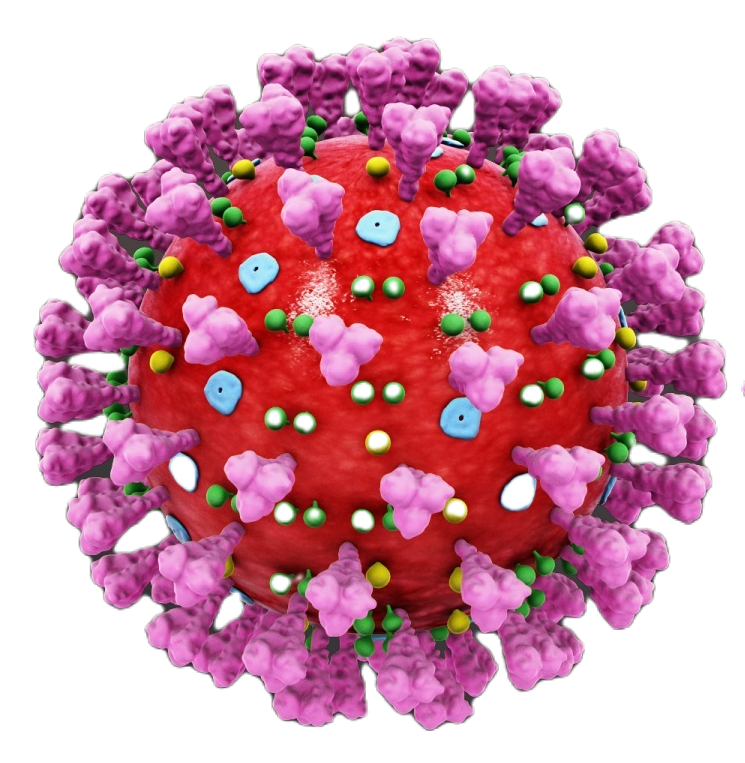 SARS_CoV_2 mutation literature information.
 PMID:
PMID:  2020
2020
 Cell
Cell

 Browser Board
 Co-occurred Entities
 Filtrator
 ViMRT
ViMRT